
May 17, 2026
Walk into a well-designed store today, and something feels different. The displays aren't just holding product. They're doing something. A screen catches your eye. Lighting pulls you toward a featured item. You find yourself stopping, touching, staying longer than you planned.
That's not an accident! It's the result of fixtures built to work harder than a standard shelf ever could.
Modern retail demands a lot more from the physical store. Fixtures now need to hold product, highlight merchandise, support digital content, and create a genuinely engaging experience, all at once. And as the pressure to compete with online shopping keeps growing, the stores that are winning are the ones treating their floor space as an experience, not just a showroom.
Custom millwork is what makes that possible. When technology is built into a fixture from day one, screens, lighting, hidden storage, charging stations, the result feels intentional and branded. A world away from something bolted together after the fact.
The Evolution of Retail Fixtures in a Digital Age
Think about how people shop now. Before most customers ever walk through your door, they've already Googled your product, watched a review, scrolled through your Instagram, and compared you to three competitors. By the time they show up in person, they're not browsing. They're deciding.
That changes everything about what a fixture needs to do. It can't just present inventory. It has to guide attention, answer questions, and give customers a reason to slow down and engage. Because the stores that earn that time are the ones that earn the sale.
Custom millwork gives retailers the ability to build around that goal specifically. Instead of squeezing your brand vision into stock shelving, the shelving is designed around how you want your customer to shop, your dimensions, your branding, and your merchandising logic.
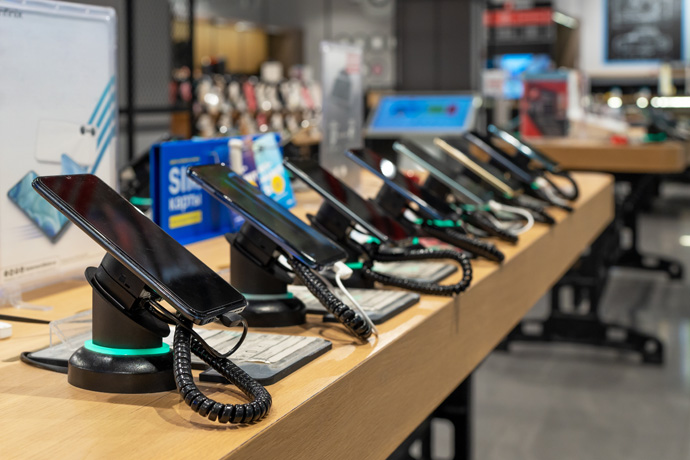
From Traditional Shelves to Smart Displays
A traditional shelf is static. It holds a product. That's about it. A smart retail fixture is a completely different thing. A single unit might include embedded digital screens, illuminated product niches, removable graphic panels, hidden cable routing, built-in charging ports, and fully adjustable shelving, all packed into something that still looks effortlessly clean.
Getting there requires serious planning at the fabrication stage. Tech-integrated displays need concealed wiring channels, ventilation for electronics, easily accessible maintenance panels, and structural reinforcement for heavier components. These details have to be baked into the design from the very beginning. That's the difference between a fixture that looks polished and one that looks like an afterthought.

The Rise of Omnichannel and Experiential Retail
Today's shopper doesn't move in a straight line. They browse online, come into touch and compare, then maybe complete the purchase from their phone later that night. Or they buy online and use the store as a pickup point that turns into a discovery session. The journey is non-linear, and it's completely normal.
That means the physical store has to do two jobs simultaneously: close sales and deliver a brand experience worth showing up for. Fixtures need to support live demonstrations, tell a product story, refresh easily for new campaigns, and do all of it without ever looking cluttered or chaotic.
Designing Interactive Fixtures with Millwork and Technology
The best interactive displays share one thing in common: you don't notice the technology. You just notice that the experience feels right. No dangling cords, no awkward tablet mounts, no hardware that looks rushed. Everything is seamless.

Built-In Screens, Sensors, and Lighting
Embedded screens have become standard across beauty, electronics, apparel, and specialty retail. They let stores run tutorials, campaign content, product walkthroughs, or seasonal branding without sacrificing floor space. Add motion sensors and integrated lighting, and you can direct a customer's attention to exactly where you want it the moment they step close.
When all of this is planned as part of the millwork, the finish is seamless. Screens sit flush in the cabinetry. Lighting tucks into shelving details. Storage stays hidden behind clean panels. The fixture looks elevated while quietly doing an enormous amount of work.
Material and Finish Considerations for Tech-Integrated Units
Technology changes what a fixture has to withstand. Electronics generate heat. Touchscreens collect fingerprints constantly. Access panels get opened and closed dozens of times a week. Everything needs to hold up under that reality and still look sharp months later.
That's why material choices matter so much at this level. Durable laminates, commercial-grade hardware, reinforced substrates, scratch-resistant finishes. These aren't upsells, they're necessities. Getting the material specification right during the design phase is what keeps a fixture performing and looking brand new long after opening day.
Benefits of Interactive Millwork for Retailers

The business case for interactive fixtures comes down to two things: more time on the floor and more control over the message.
When a display teaches a customer something, invites them to test a product, or visually spotlights a hero item, they linger. And lingering leads to decisions. In a busy retail environment, even a few extra minutes of genuine engagement can meaningfully move conversion rates.
The flexibility payoff is just as valuable. Because these fixtures are custom-built, shelving, graphic panels, lighting, and inserts can all be designed to adapt for a seasonal campaign, a new product launch, or a complete category refresh, without replacing the entire unit. The fixture grows with your business instead of working against it.
Partnering with a Millwork Firm for Cutting-Edge Retail Projects
A retail display that combines technology, branding, and commercial durability is not a standard casework job. It requires real expertise across fabrication precision, material performance, and technical integration, all working together.
At Joseph A. Interiors, that's exactly how we approach custom retail fixtures. Every project is built with the same attention to how it looks, how it functions, and how long it lasts, so retailers get displays that are visually striking on day one and still performing years down the line.
The stores standing out right now aren't just stocking great products. They're building environments where the fixture itself becomes part of why people buy. And that starts long before anything hits the sales floor.
Custom millwork is already a statement of craftsmanship. When paired with thoughtful lighting, it becomes immersive, functional, and emotionally resonant. If you’re planning a luxury renovation, boutique retail space, or simply want to elevate your interiors with detail-driven design, we’d love to talk. Let’s bring your vision to life!
- Share:
-

-

-

-


