
June 13, 2026
Some of the hardest-working spaces in a home are also the ones that receive the least attention during the design process.
The mudroom and entryway absorb the daily chaos of family life. Shoes pile up by the door. Backpacks migrate across the floor. Coats end up draped over chairs. Packages, pet supplies, and charging cords seem to collect in the same few square feet.
When these spaces are not designed with storage in mind, clutter tends to spread into the rest of the home. When they are thoughtfully planned, however, they can create a smoother daily routine and make the entire house feel more organized.
Custom millwork allows homeowners to tailor storage to the way they actually live, creating designated places for everyday essentials while maintaining a polished, cohesive appearance.
The Function of Mudrooms and Entryways in Modern Homes
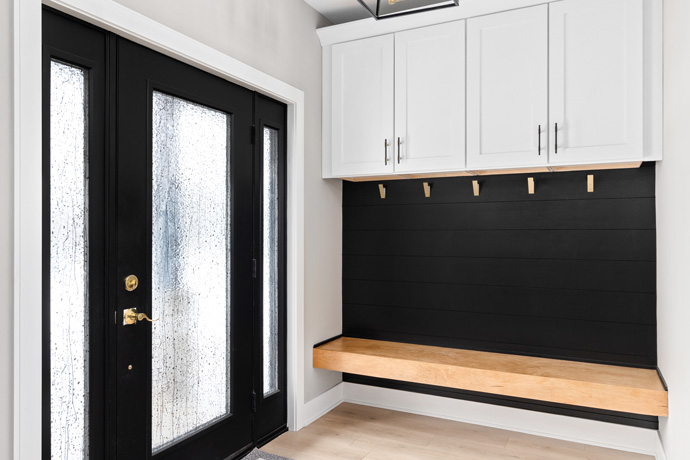
Mudrooms have evolved far beyond a simple transition space between indoors and outdoors.
Today, many households rely on these areas as drop zones, family command centers, charging stations, pet care areas, and storage hubs. The challenge is fitting all of those functions into a space that still feels welcoming and visually organized.
Unlike freestanding furniture, custom millwork can be designed around the exact dimensions of a room and the specific needs of the people using it. A family with three young children will likely need a different storage strategy than empty nesters who travel frequently or homeowners with multiple dogs.
This level of customization becomes especially valuable in smaller homes, where every inch of storage matters. Many of the same principles used in compact living spaces, such as maximizing vertical storage and eliminating wasted space, can dramatically improve the functionality of a mudroom or entryway.
For homeowners looking to make the most of limited square footage, our guide to maximizing small spaces with custom cabinetry explores several design strategies that translate well to entryway storage solutions.
Designing Custom Cubbies and Benches
The most successful mudrooms feel intuitive to use. Family members should be able to walk through the space and naturally know where their belongings belong. Achieving that level of functionality requires careful planning.
Layout Considerations for Families
One of the first questions designers ask is how many people will use the space every day.
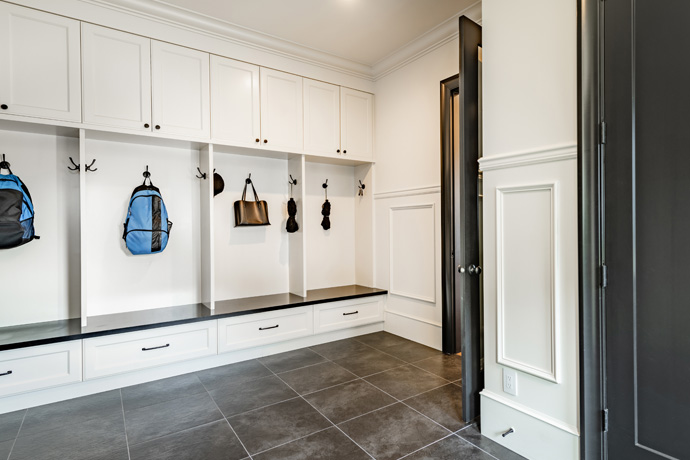
A mudroom designed for a family of five often benefits from individual storage zones, with each person receiving a dedicated cubby, bench space, and upper storage area. Assigning specific locations for coats, shoes, backpacks, and sports equipment can significantly reduce clutter and improve organization.
Bench seating is another common feature, but size and placement matter. A bench should provide enough room to comfortably put on shoes without disrupting traffic flow through the space.
Vertical storage is often underutilized in entryways. Cabinets that extend to the ceiling can provide valuable space for seasonal items, holiday décor, luggage, or infrequently used household supplies.
Custom cabinetry also allows designers to take advantage of awkward corners, narrow walls, and spaces around doorways that would otherwise go unused. Similar to a well-designed kitchen, every inch can be planned with purpose.
Many homeowners discover that the same principles behind custom residential cabinetry can dramatically improve organization throughout the home, especially in high-traffic areas like mudrooms and entryways.
Integrating Charging Stations, Pet Areas, and Hidden Storage
Modern mudrooms often need to accommodate much more than coats and shoes.
Many homeowners request built-in charging stations where phones, tablets, laptops, and smart watches can remain organized and powered throughout the day. Integrating these features directly into cabinetry helps reduce visible cords and keeps countertops clear.
Pet owners may benefit from dedicated storage for leashes, treats, grooming supplies, and food containers. Some custom designs even incorporate feeding stations that slide neatly into cabinetry when not in use.
Hidden storage remains one of the most requested features in contemporary mudroom design. Deep drawers beneath benches can store seasonal accessories, while concealed compartments can house items that homeowners prefer to keep out of sight.
Custom door solutions can further enhance functionality by helping conceal storage zones while maintaining a clean appearance. Depending on the layout, sliding, pocket, or specialty door systems may provide additional flexibility without consuming valuable floor space. Homeowners interested in these options can explore Joseph A. Interiors' custom door systems for inspiration
Choosing Materials and Finishes That Withstand Daily Use
Mudrooms and entryways experience some of the highest levels of daily wear in the home. Unlike formal living spaces, these areas must stand up to wet shoes, backpacks, pet traffic, dirt, and constant use. Selecting durable materials from the beginning can significantly extend the lifespan of the millwork and reduce maintenance over time.
Moisture-Resistant Surfaces and Easy-Clean Laminate
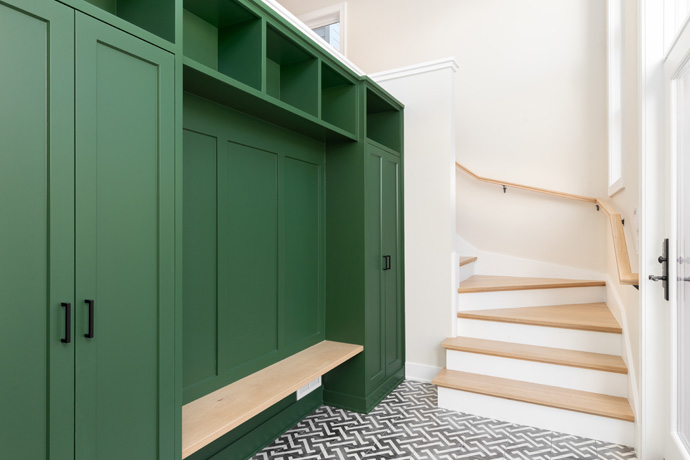
Durability should always be a priority in high-traffic environments. Moisture-resistant materials help protect cabinetry from damage caused by snow, rain, wet umbrellas, and damp footwear. This becomes particularly important in climates with harsh winters or frequent seasonal weather changes.
High-performance laminates have become increasingly popular because they offer excellent durability while remaining easy to clean. Many modern laminate products closely replicate the appearance of wood grain, painted finishes, or textured surfaces while providing greater resistance to scratches, stains, and moisture.
Paint finishes should also be selected with durability in mind. High-touch surfaces tend to show wear more quickly, particularly around drawers, doors, and frequently used storage compartments.
For a deeper look at how different materials perform under daily wear, read our guide to finish durability in high-touch spaces.
Coordinating With the Rest of Your Home's Millwork
A well-designed mudroom should feel connected to the rest of the home rather than appearing as a separate utility space. This often begins with matching cabinetry styles, wood species, paint colors, and hardware finishes throughout adjacent rooms. Consistency helps create visual flow and reinforces the architectural character of the home.
Many homeowners choose to coordinate mudroom cabinetry with nearby kitchens, laundry rooms, or built-in storage systems. Working within a unified design language creates a more cohesive overall appearance and can make even highly functional spaces feel elevated.
Architectural details play an important role as well. Panel profiles, moldings, trim details, and decorative elements can all help tie a mudroom into the surrounding interior architecture. Thoughtful trim work often makes the difference between cabinetry that looks installed and cabinetry that feels fully integrated into the home.
For homeowners interested in creating continuity throughout their interiors, our guide to architectural trim and moldings explores how these details contribute to a more refined and cohesive design.
At Joseph A. Interiors, custom mudrooms and entryways are designed with both beauty and practicality in mind. Through thoughtful planning, durable materials, and expertly crafted millwork, these often-overlooked spaces can become some of the most functional and valuable areas of the home, helping busy households stay organized while making a strong first impression every time someone walks through the door.
Transform Your Space: Discover the Luxury of Custom Interior Design Today!
- Share:
-

-

-

-


